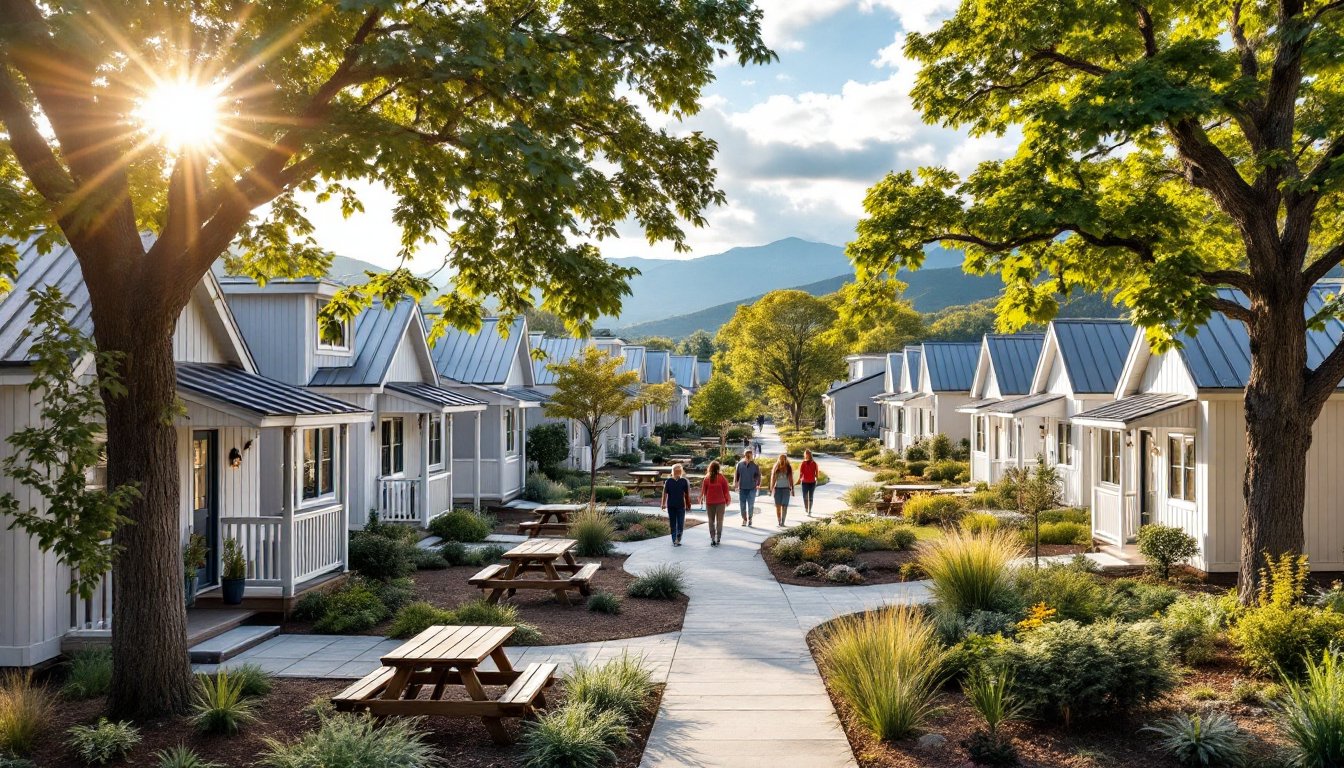
Tiny home communities are reshaping how people buy and live in North Carolina. Whether you’re downsizing, cutting housing costs, or seeking a intentional lifestyle, tiny home communities in NC offer an alternative to traditional single-family home ownership. These planned communities provide a middle ground, you own your home, but benefit from shared infrastructure, managed common spaces, and a built-in social structure. This guide walks you through what’s available, what to expect financially, and how to evaluate whether a tiny home community fits your goals.
Table of Contents
ToggleKey Takeaways
- Tiny home communities in NC provide affordable homeownership with prices between $100,000–$300,000, significantly lower than the state’s median single-family home price of $350,000+.
- Western North Carolina, especially around Asheville, leads tiny home development with scenic settings and strong community amenities, while emerging opportunities exist in the Research Triangle and coastal regions.
- Monthly costs for tiny homes average $1,260 in principal and interest (on a $200,000 home), plus $200–$500 in HOA fees, delivering substantial long-term savings compared to traditional homes.
- Before purchasing, carefully review CC&Rs and architectural guidelines, verify HOA stability, and visit communities multiple times to evaluate amenities, rules, and resident satisfaction.
- Tiny home communities in NC emphasize environmental efficiency and social connection through shared spaces and walkable designs, appealing to retirees, downsizers, and first-time homebuyers seeking lifestyle balance over investment returns.
What Makes Tiny Home Communities Appealing to NC Homebuyers
Tiny home communities appeal to a wide range of buyers in North Carolina for practical and lifestyle reasons. The most obvious draw is affordability. A tiny home in North Carolina typically costs $100,000 to $300,000, compared to the state’s median single-family home price hovering around $350,000+. Lower purchase price also means lower property taxes, reduced utility bills, and minimal maintenance overhead.
Beyond finances, many buyers are attracted to the community aspect. Unlike isolated suburban homes, tiny home communities foster connection through shared amenities, walkable designs, community gardens, gathering spaces, and organized events. This appeals especially to retirees seeking social engagement without the upkeep of a large property, and younger professionals wanting an affordable entry point into homeownership.
Environmental considerations matter too. Most tiny home communities emphasize efficient design, sustainable materials, and reduced footprints. Many residents appreciate the lower resource consumption and smaller carbon impact compared to traditional homes. For empty-nesters or downsizers, a tiny home eliminates the burden of maintaining a large house while freeing up capital for travel or retirement.
Top Tiny Home Communities Currently Available in North Carolina
Communities in Western North Carolina
Western North Carolina, particularly around Asheville and the Blue Ridge region, has emerged as a hub for tiny home development. The region’s progressive building culture, scenic setting, and strong second-home market create ideal conditions for community projects.
Biltmore Forest and Asheville-area communities dominate the western market. Several developments near the Biltmore Estate and South Asheville offer modern tiny homes with proximity to downtown dining and cultural amenities. Prices here typically range from $180,000 to $280,000 for 800–1,000 sq ft homes. These communities often feature private trails, community centers, and architectural standards that preserve the region’s mountain character.
Other western mountain communities offer more affordable options. Small developments in towns like Weaverville, Black Mountain, and Boone cater to retirees and remote workers seeking lower costs and mountain access. You’ll find homes from $120,000 to $220,000 in these areas, though some communities have longer wait lists due to limited inventory.
Communities in Central and Coastal Regions
Central North Carolina, especially the Research Triangle (Raleigh, Durham, Chapel Hill), is seeing growth in urban tiny home communities. These are often denser developments with townhome-style tiny homes in walkable neighborhoods close to employment centers and shopping. Prices here range from $200,000 to $350,000 due to higher land costs and strong demand. Communities near downtown areas or light-rail access command premiums.
Coastal tiny home communities remain fewer but are emerging around Wilmington and the Outer Banks. These often appeal to retirees and vacation home buyers. Flood insurance, wind codes, and coastal building requirements affect both construction and long-term costs, factor in higher insurance premiums and stricter building codes when evaluating coastal properties. Prices here range widely based on proximity to the water, from $150,000 inland to $350,000+ near the shore.
Recent developments like those covered in modern architecture and sustainable design articles showcase the contemporary building approaches many NC communities are adopting. For detailed pricing trends and market analysis, resources like Curbed’s real estate coverage provide broader context on North Carolina’s housing market.
Financing, Costs, and Affordability Factors
Financing a tiny home is straightforward if you understand the differences from traditional mortgages. Most conventional lenders (banks, credit unions, mortgage brokers) will finance tiny homes with the same rates and terms as standard homes, provided the property meets local lending standards. Expect to pay 3–6% down for conventional loans, or explore FHA loans if you’re putting down less than 20%.
The real cost advantage comes from total monthly payments. A $200,000 tiny home at 6.5% over 30 years costs roughly $1,260 monthly (principal and interest), plus taxes, insurance, and HOA fees. Comparable traditional homes might run $2,200+ monthly before utilities. Over 30 years, that’s substantial savings.
HOA fees vary significantly depending on the community’s amenities and maintenance standards. Expect $200–$500 monthly in most NC tiny home communities. This typically covers common area maintenance, road upkeep, trash service, and sometimes utilities like water or sewer. Some communities include amenities, pools, fitness centers, or guest parking, that justify higher fees. Always request a detailed breakdown and financial statements before buying.
Other hidden costs to budget: homeowner’s insurance runs $800–$1,500 annually: property taxes depend on the county and assessed value (Mecklenburg and Wake counties are higher: rural counties lower): and utilities typically run $80–$150 monthly for a well-insulated tiny home. In coastal areas, flood insurance can add $500–$2,000 annually if you’re in a flood zone.
One often-overlooked factor: land appreciation in tiny home communities tends to be slower than single-family homes in traditional neighborhoods, so view this as a lifestyle and affordability decision, not primarily an investment.
Evaluating Amenities, Rules, and Community Standards
Before committing, thoroughly review the community’s CC&Rs (Covenants, Conditions & Restrictions) and architectural guidelines. These documents dictate what you can and can’t do with your property, exterior colors, landscaping rules, pet policies, rental restrictions, and even modification limits. Some communities are strict: others are flexible. Read them carefully: they’re binding.
Ask whether the community allows rentals or only owner-occupied homes. Some NC tiny home communities prohibit rentals to preserve neighborhood character: others encourage investor purchases. This affects resale and long-term use. Similarly, clarify pet policies, guest parking rules, and noise ordinances, these matter more in close-quarters living.
Evaluate the developer and homeowners association (HOA) reputation. Are they responsive to maintenance issues? How stable is the HOA financially? Request recent meeting minutes and reserve fund reports. A well-managed HOA with healthy reserves suggests the community is sustainable: a struggling one signals potential special assessments or deferred maintenance.
Visit multiple times, once on a weekday and once on a weekend. Talk to existing residents about their experience. Are neighbors friendly or isolated? Do community events actually happen, or are amenities underused? Check small space living and design ideas for tips on maximizing a tiny home’s potential, which can inform your evaluation of floor plans and layout options.
Finally, confirm future development plans. Are all homes built, or is the community still expanding? Is there a waitlist? Understanding the timeline helps you know whether your community will feel complete or perpetually under construction.
Conclusion
Tiny home communities in North Carolina offer a realistic path to affordable homeownership, especially for retirees, downsizers, and first-time buyers. The key is matching a community’s lifestyle, financial structure, and rules to your priorities. Do your assignments: visit in person, review financial statements and CC&Rs, talk to residents, and run the numbers. When you find the right fit, a tiny home community can deliver both the independence of homeownership and the benefits of intentional community living.