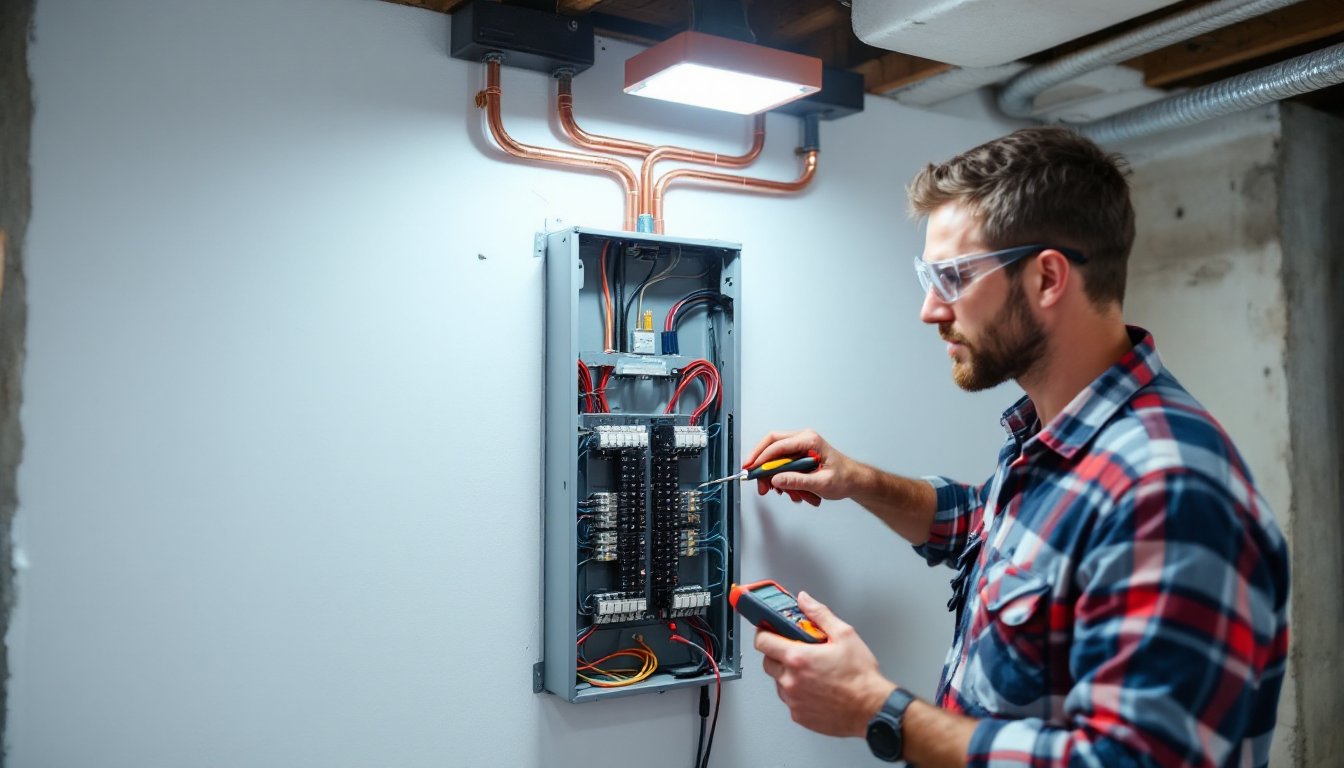
Your home’s electrical panel, that metal box on the wall or mounted outside, is the nervous system of your house. It distributes power to every circuit, every outlet, and every appliance running inside. But here’s the catch: if your panel is 20, 30, or even 50 years old, it was built for yesterday’s power needs. Today’s homes demand more. Slow charging an EV in the garage, running a heat pump, powering a home office with multiple devices, these tasks strain aging panels. An electrical panel upgrade might not be glamorous, but it’s one of the smartest investments you can make for safety, capability, and home value.
Table of Contents
ToggleKey Takeaways
- An electrical panel upgrade is essential for homes 20+ years old struggling with modern power demands like EV charging, heat pumps, and multiple appliances, as aging panels become fire hazards and safety liabilities.
- Frequent circuit breaker trips, fused panels, burnt-smelling outlets, or undersized service (under 200 amps) are clear signs your home needs a panel upgrade to safely handle current electrical loads.
- Most modern homes require at least 200-amp service as a baseline, with homes featuring electric vehicles or central heat pumps often needing 300-amp service or higher for safe operation.
- A licensed electrician must handle the entire electrical panel upgrade process, which typically takes 2–4 weeks from permit to reconnection and costs $1,500–$3,000 for a straightforward 200-amp upgrade.
- Load calculations performed by your electrician determine the right panel size by assessing major circuits (EV charger 40–50 amps, heat pump 50 amps, electric range 40–50 amps), ensuring proper capacity for your home’s needs.
- Upgrading your electrical panel improves home safety, supports future appliances without additional work, increases resale value, and protects your home’s insurability against code violations and liability risks.
Signs You Need an Electrical Panel Upgrade
Your panel is telling you when it’s time to upgrade, you just need to listen.
Frequent breaker trips are the clearest sign. If your main breaker or individual circuit breakers flip regularly when you’re using normal appliances, your panel is maxed out. This isn’t just an inconvenience: it’s a fire hazard. Constant trips mean the system can’t safely handle your electrical load.
Fuses instead of breakers are another red flag. Homes with fuse panels (those round screw-in fuses) are relics of the 1960s and earlier. They’re harder to work with, less safe, and insurers often charge more for homes running on them, or won’t cover them at all.
Burned-smelling outlets, visible scorch marks around the panel, or discoloration inside the breaker box need immediate attention. These suggest dangerous arcing or overheating. Don’t wait on this: call a licensed electrician right away.
An under-sized panel, typically 100 amps or less in homes built before 1980, can’t support modern appliances. Most modern homes run on 200-amp service, and homes with electric vehicles or central heat pumps often need 300-amp service or higher. Modern code standards expect at least 100 amps minimum, but 200 amps is the practical baseline today.
Common Reasons Homeowners Upgrade Their Panels
Beyond safety, homeowners upgrade for practical reasons.
Adding major appliances is the most common trigger. Installing a new HVAC system, adding central air conditioning, upgrading to an electric water heater, or installing an EV charging station all demand additional amperage. These aren’t optional upgrades, they require sufficient service to operate safely and reliably.
Home additions and renovations push power demands higher. If you’re finishing a basement, adding a second kitchen, or creating a home office with heavy equipment, you’ll need circuits dedicated to those spaces. Newer building codes, which vary by jurisdiction but follow patterns from the International Residential Code (IRC), often require more circuits and outlets than older homes had.
Many homeowners upgrade proactively when they notice their panel is at or over capacity. If you’re already running near your amp limit (check your main breaker), there’s no room for growth without an upgrade. Adding future circuits becomes impossible without one.
Real estate considerations matter too. Buyers expect modern, safe electrical systems. A dated or undersized panel can stall a sale or knock down an offer. Upgrading signals that the home has been well-maintained and is ready for current living standards.
Planning Your Panel Upgrade: What to Know Before Starting
This isn’t a DIY project, but understanding the steps helps you plan and talk smartly with electricians.
First, have your existing panel inspected. A licensed electrician will document your current amperage, identify outdated components, and assess whether your home’s wiring can support a larger panel. Some older homes have wiring that limits how much service you can safely upgrade to: you can’t just drop a 200-amp panel into a 100-amp home if the service entrance wiring won’t handle it.
Second, determine what amperage you actually need. Add up the amperage of the major circuits you want (or might want): an EV charger typically needs 40–50 amps, a central heat pump about 50 amps, an electric range 40–50 amps, water heater 30 amps. Planning an electrical remodel. Your electrician can do a load calculation based on your home’s size and appliances to recommend the right panel size.
Third, check local permits and codes. Electrical panel upgrades require a permit in virtually every jurisdiction. Your electrician should handle this, but confirm upfront. Unpermitted work creates liability and inspection headaches later. Building codes vary by region, but the National Electrical Code (NEC) sets standards across the US.
When to Hire a Licensed Electrician
Hire a licensed electrician for the entire upgrade. This isn’t optional. Panel work involves live wires, utility connections, and code compliance that demand professional expertise. A misstep can cause electrocution, fire, or code violations that compromise your home’s safety and insurability. Get at least two estimates. Good electricians are transparent about labor, materials, and timeline. Ask whether the estimate includes the utility company’s work, they’ll handle disconnecting and reconnecting the main service line.
The Panel Upgrade Process: What Happens Step by Step
Knowing the process sets realistic expectations.
Step 1: Inspection and Permit. Your electrician inspects the existing panel, pulls a permit, and submits plans to your local building department. This takes 1–2 weeks. Most jurisdictions require the utility company’s approval before work starts.
Step 2: Utility Coordination. The utility company schedules a disconnect. Your electrician or the utility cuts power to the home at the meter. This is mandatory: live work on main service is not safe.
Step 3: Physical Removal and Installation. The electrician removes the old panel and disconnects all circuits. The service entrance wiring (the main lines from the meter to the panel) is evaluated and replaced if needed. The new panel is mounted, grounded, and all circuits are re-connected and labeled. This usually takes one full day for a straightforward upgrade, longer if wiring upgrades are needed.
Step 4: Inspection and Reconnection. The local building inspector visits to verify the work meets code. Once approved, the utility reconnects service. Power is restored. Your electrician tests circuits and hands you documentation.
The entire process typically takes 2–4 weeks from permit to final inspection, depending on permit queue times and any wiring complications. Your home will be without power during the physical work, usually 8–10 hours. Plan accordingly.
Cost Considerations and Budgeting for Your Upgrade
Costs vary widely by region, panel size, and whether additional wiring is needed.
A straightforward 200-amp panel upgrade in a home with existing adequate service entrance wiring typically costs $1,500–$3,000 in labor and materials. If your service entrance wiring needs replacement, which is common in older homes, add another $500–$2,000. Regional variation is significant: urban areas and regions with higher labor costs run higher. A 300-amp panel (for homes with EV chargers and heat pumps) costs more due to heavier-gauge wiring and bigger breakers.
Other costs to budget for: permits (typically $100–$300), electrician inspections if the first inspection fails and rework is needed, and potential foundation drilling or wire runs if the new panel location differs from the old one.
Get written estimates. Don’t hire the cheapest option if the contractor seems unclear about code requirements or willing to work without permits. Expert home improvement guidance from trusted sources emphasizes that cutting corners on electrical work creates safety liabilities and future headaches. A licensed, permitted upgrade protects you legally and practically.
Many homeowners bundle panel upgrades with other electrical work, adding circuits, installing dedicated outlets for a home office, or upgrading lighting, to reduce the electrician’s overall trip cost. Plan this smartly: it’s cheaper to add circuits during a panel upgrade than to retrofit them later.
Conclusion
An electrical panel upgrade isn’t exciting, but it’s essential. If your home is showing signs of electrical strain, constant breaker trips, fuse boxes, or an undersized panel, don’t ignore it. The good news: modern panels are reliable, safe, and built to handle decades of use with proper maintenance. A licensed electrician makes the process straightforward. Budget smartly, plan ahead for permitting, and view the upgrade as an investment in your home’s safety, functionality, and resale value.